
Portfolios, Reflection, and Student-Led Conferences
Brightworks develops student growth
When families think of the word assessment, it often brings to mind images of timed tests, red pens, and students sitting silently in rows. But the word has a very different—and much more beautiful—origin.
Assessment comes from the Latin assidēre, meaning “to sit beside.”
And that is exactly how Brightworks approaches it.
Here, learning is not something done to students; it is something created with them. Reflection and feedback are shared, collaborative moments that empower young people to understand their growth, articulate their goals, and take ownership of their learning journey.
Over the past two years, we have continued to refine how we support this kind of meaningful reflection. As an ever-evolving school, we adapt our systems so they align with our philosophy: to cultivate agency, curiosity, and authentic learning.
Below is an overview of how we assess learning at Brightworks—through portfolios, intentional conversations, and student-led conferences.
Portfolios: Showing the Story Behind the Work
At a school without tests or letter grades, families sometimes ask: How do we show evidence of learning?
Our answer: through the work itself.
Portfolios allow students to curate, share, and reflect on their learning in thoughtful and authentic ways. They highlight both finished products and the process behind them—a crucial part of understanding growth, persistence, and creativity.
Students build two types of portfolios:
Process Portfolios: These show the journey—drafts, sketches, notes, questions, setbacks, breakthroughs.
Product Portfolios: These showcase completed work the student is proud of.
Because Brightworks honors individuality, portfolios don’t all look the same. Some students create digital collections; others build print-based books or curated displays. Across bands, collaborators are experimenting with formats so each child’s work can travel with them over the years and show their evolving voice and thinking.
Goal-Setting Meetings: Beginning the Year with Intention
During the first arc, when students and collaborators are getting to know each other, we hold goal-setting meetings with families. Unlike traditional conferences, this first conversation is centered on the student—their hopes, dreams, interests, and intentions for the year.
It’s a chance for families to share what matters most to them and for students to articulate what they want to grow toward. These early conversations set the tone for a year of agency, connection, and shared purpose.
Student-Led Conferences: Reflection in Real Time
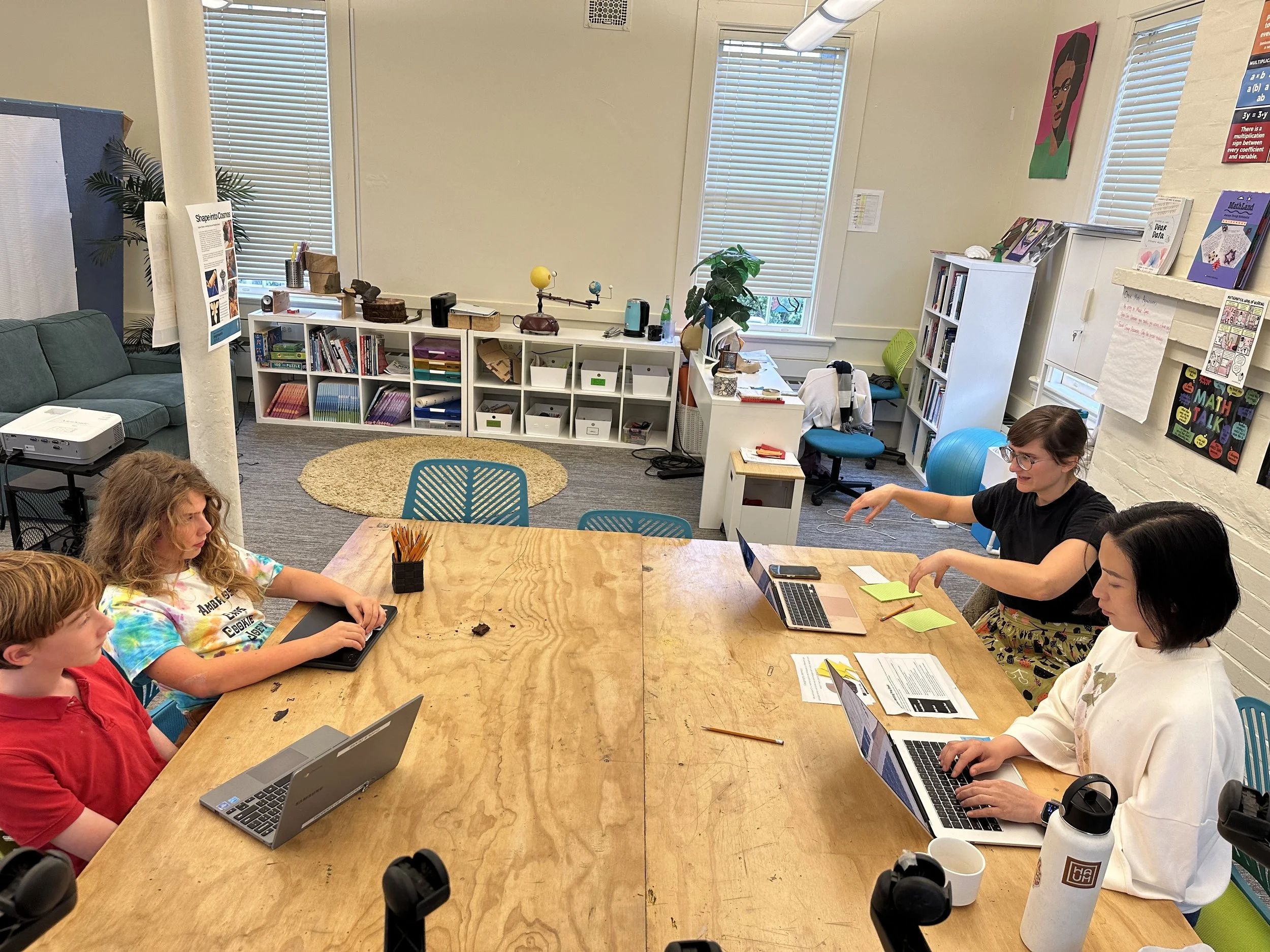
Traditionally, many schools hold conferences at the end of a term, once all the work is complete. But at Brightworks, reflection is most powerful when it can still shape what comes next.
That’s why we hold student-led conferences mid-arc, when students are deep in their Exploration work.
During these conferences, students:
curate their portfolio
reflect on what they’ve learned so far
ask for support where they need it
set meaningful goals for the rest of the arc
share their emerging declarations with their families
The experience looks different by age. Younger students might follow guided prompts or use sentence frames. Older students may lead the conversation more independently, selecting specific work samples to illustrate their thinking.
Across all stages, the purpose is the same: to help learners see themselves as active, capable authors of their own learning.
Narrative Assessments: A Clear Picture of Growth
In addition to conferences, families receive narrative assessments—thoughtful written reflections that illuminate each child’s academic, social, and project-based progress.
Two written assessments go home each arc:
A narrative assessment before the student-led conference, giving context to the conversation.
A shorter project-related assessment at the end of the arc, highlighting key skills and learning outcomes.
These narrative snapshots offer a holistic, strengths-based view of each student—a far richer picture than any percentage score could convey.
Why This Matters
When children participate actively in reflecting on their learning, something powerful happens:
They become more confident.
They become more self-directed.
They become more engaged and invested in their work.
Our approach to assessment—sitting beside students, not above them—helps them build the skills they will carry far beyond Brightworks: self-awareness, agency, communication, resilience, and pride in their own growth.
This is assessment the way it was originally meant to be.
And it’s one of the many ways we help students learn to know themselves as learners—and as humans.